
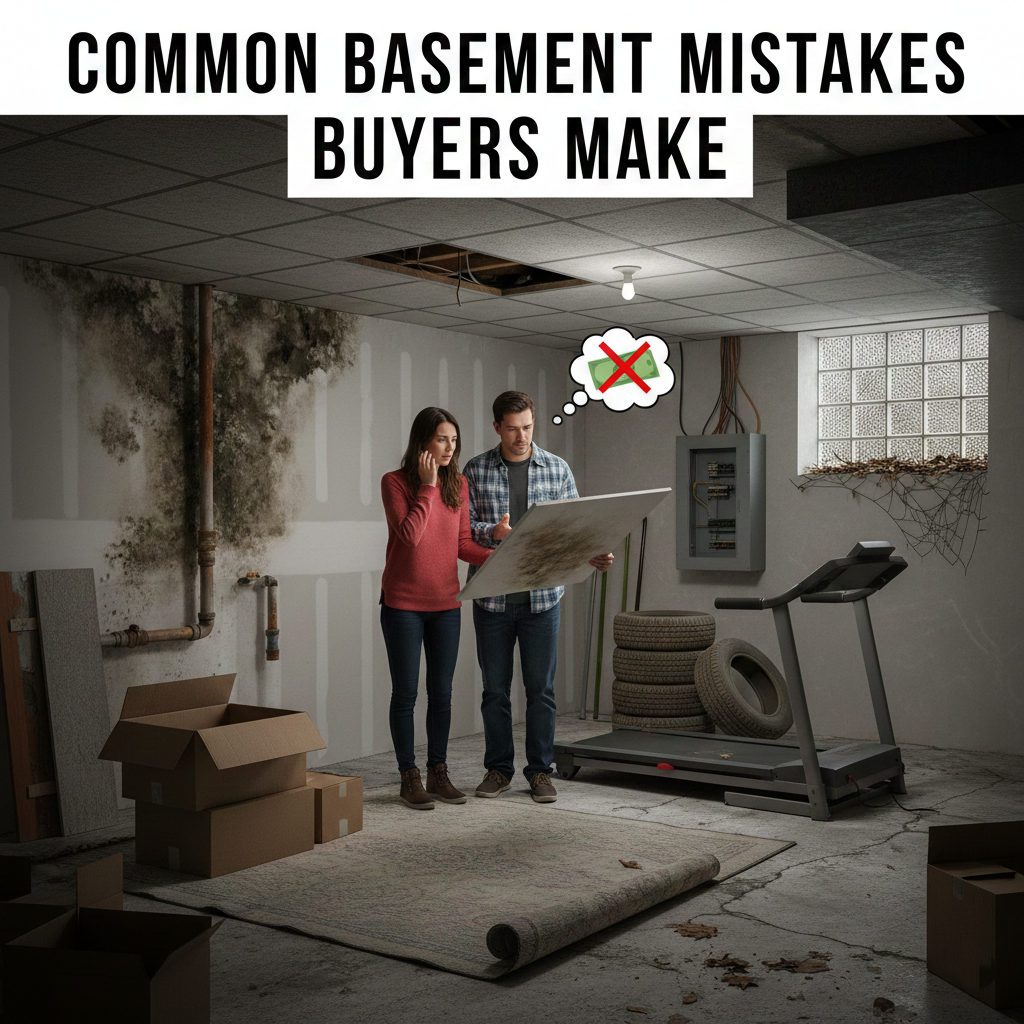
Basements can be highly efficient, cost-effective spaces when chosen correctly. However, most issues associated with basements don’t come from the concept itself—they come from small but critical oversights during purchase.
Understanding these common mistakes helps buyers make better, safer, and more future-proof decisions.
1. Focusing Only on Price, Not Suitability.
One of the most common mistakes is buying a basement simply because it is cheaper.
Basements should be evaluated based on:
Intended use.
Layout flexibility.
Long-term usability.
A basement that is slightly more expensive but better planned often performs far better than a cheaper option with limitations.
2. Not Matching the Basement to the Intended Use.
Every basement is not suitable for every purpose.
For example:
A storage or warehouse basement has different needs than a gym or office.
Customer-facing uses require better access and planning.
Operational uses prioritise space, height, and layout.
Buying without clearly defining the end use often leads to compromises later.
3. Ignoring Ventilation Planning.
Ventilation is a key performance factor for any basement.
Buyers sometimes assume:
Existing exhausts are sufficient.
Ventilation can be “managed later”.
In reality, well-planned ventilation ensures:
Better air quality.
Comfortable working conditions.
Long-term usability of the space.
Checking ventilation provisions early avoids future modifications.
4. Overlooking Ceiling Height After Finishing.
Ceiling height should be evaluated after flooring, lighting, ducts, and services.
A basement may look tall in raw condition but feel restricted once finished. This is especially important for:
Gyms
Offices
Commercial activity spaces
Always assess the effective usable height, not just the structural height.
5. Not Reviewing Drainage & Floor Levels.
Floor slope and drainage are small details that make a big difference.
Buyers sometimes miss:
Floor slope direction.
Drain placement.
External water discharge paths.
Well-designed drainage improves long-term reliability and ease of maintenance.
6. Skipping Legal & Usage Verification.
Basements often have specific approved uses mentioned in sanctioned plans.
A common mistake is assuming:
All basements can be used for any purpose.
Approval won’t matter later.
Verifying approved usage early ensures smooth operation and peace of mind.
7. Treating a Basement Like Any Other Floor.
Basements are technical spaces, not just lower floors.
They require attention to:
Services planning.
Access and circulation.
Utility layout.
Buyers who approach basements with this mindset usually have far better outcomes.
How to Avoid These Mistakes?
The solution is simple:
Be clear about your intended use.
Check planning basics early.
Evaluate the basement as a functional asset, not just a cheaper option.
A thoughtfully selected basement often becomes one of the most efficient spaces in a building.
Most basement-related issues are preventable at the buying stage.
When evaluated properly, basements offer excellent value, flexibility, and long-term usability. Avoiding common mistakes ensures that your basement works for you, not against you.